workOwonworkOwonA New Way to Connect
HomeFeedJobsCommunitiesEventsFeaturesAbout workOwon

New to workOwon?

  • Post and join conversations
  • Apply to jobs in a few clicks
  • Join communities in your field
Join nowLog in

Popular communities

See all

See what professionals are talking about

Browse public posts from people and communities. Join to react, comment and post.

Log inJoin now

Navya Pillai

iOS Engineer | Swift, SwiftUI | Health & fitness apps | Accessibility advocate

Oct 27

😂 An iOS Developer's Daily Drama 🍎📱

Me: “Just one small change in SwiftUI. I'll be done in 5 minutes.” 😎

Xcode: Indexing… ⏳

Me: “Okay, I'll wait.”

Xcode: Build failed. 💀

Me: “But I didn't change anything!”

Simulator: Unexpectedly quit. 🤡

Me: “Fine, let's try a clean build.”

Xcode: Building… ☕☕

Finally, the app runs perfectly!

Product Manager: “Can we move that button just a little to the left?” 🙂

Me: Opens Xcode and questions every career decision. 😂😭

iOS development: Where a 2-pixel change can cost you 2 hours!

iOS developers, what's your biggest struggle?

1️⃣ Xcode build errors
2️⃣ SwiftUI layout issues
3️⃣ Simulator crashes
4️⃣ App Store review 😭

#iosdevelopment#swiftui#xcode#developerlife#codinghumor#techhumor

Anika Verma

Data Analyst | SQL, Power BI, Python | Turning messy data into decisions

Oct 27

Good Data Analysis Is About Asking the Right Questions!

A dashboard can show hundreds of numbers, but the real value of data analysis is understanding what those numbers actually mean.

While analyzing marketing and operations data, here are 5 things worth focusing on:

1. Start With the Business Question
Before writing SQL, understand what you're trying to measure and why it matters.

2. Use SQL to Find the Story
CTEs, joins, and aggregations help turn raw data into meaningful insights.

3. Choose the Right KPIs
Metrics like conversion rate, customer retention, and campaign ROI can help teams make better decisions.

4. Keep Dashboards Simple
Highlight important trends, comparisons, and changes instead of overwhelming users with too many charts.

5. Turn Insights Into Action
Finding a trend is only the first step. The real impact comes from understanding its cause and recommending what to do next.

My takeaway: A good analyst doesn't just explain what happened — they help the business understand why it happened and what to do next.

I'm also exploring Machine Learning fundamentals to understand how predictive analytics can support better decisions.

Data Analysts: Which skill has helped you most in your work — SQL, data visualization, or business understanding?

#dataanalytics#sql#datavisualization#marketinganalytics#businessintelligence#machinelearning#datadrivendecisions
Post image

Dhruv Joshi

Software Developer | Java, Spring Boot, React | Learning system design one outage at a time

Oct 19

Microservices don't automatically make your application scalable.

You can split a monolith into 10 different services and still end up with a poorly designed system.

Why?

Because microservices introduce new challenges:

Network latency between services
Distributed transaction management
Service discovery and communication failures
Distributed logging and tracing
Increased infrastructure and deployment complexity

A well-designed monolith can outperform a poorly designed microservices architecture.

Before splitting a service, ask yourself:

Does it need to scale independently?
Does it have a clear business boundary?
Will independent deployment provide real value?
Can the team manage the added operational complexity?

Architecture isn't about using more technologies. It's about making the right trade-offs.

What's your preference for a new product: a modular monolith or microservices?

#microservices#systemdesign#java#springboot#softwarearchitecture#backendengineering

Myra Chawla

Product Manager @ Moneyleaf | Fintech, payments, growth | Ex-engineer

Oct 27

Not Every Product Metric Tells the Full Story!

As a Product Manager, one of the most important skills is knowing which metrics actually reflect user value.

Imagine a UPI app with 1 million transactions every day. Sounds great, right? But what if payment failures are increasing and users are retrying multiple times?

That's why looking at a single metric can be misleading.

Here are 4 things I believe product teams should measure:

Success Rate: Are users completing payments successfully?

Failure Rate: Where are users getting stuck, and why?

Time to Complete: How quickly can users finish their tasks?

User Retention: Are users returning because the product genuinely solves their needs?

The key lesson: Metrics should help us understand user behavior, not just make dashboards look impressive.

For fintech products, trust is built through reliable experiences, transparent communication, and consistent performance.

Product Managers: What's one metric you would prioritize for a UPI app — payment success rate, transaction speed, or user retention?

#productmanagement#fintech#upi#productanalytics#datadrivendecisions#userexperience

Reyansh Iyer

Data Engineer | Spark, Airflow, dbt, Snowflake | Pipelines that don't break on Mondays

Oct 25

Remind myself when building data pipelines:

  1. Clean data is better than more data.

  2. Validate before you transform.

  3. Test SQL models, not just the pipeline.

  4. Make retries safe and pipelines idempotent.

  5. Monitor data freshness, not just job status.

  6. Document assumptions — future you will thank you.

Remember: A successful pipeline moves data. A reliable pipeline delivers data you can trust.

#dataengineering#sql#dbt#apacheairflow#dataquality#learninginpublic

Kabir Singh

Full Stack Dev | Node.js, React, MongoDB | Travel-tech | Open to backend-heavy roles

Oct 25

Your API Is Fast in Development. What Happens When 10,000 Users Hit It?

An API that works perfectly with a few requests may struggle when real traffic increases. That’s why performance should be considered during development, not only after a production issue.

Here are 5 ways to build more efficient backend APIs:

1. Optimize Database Queries
Avoid unnecessary queries, use suitable indexes, and inspect slow queries before adding more infrastructure.

2. Use Pagination
Return data in manageable batches instead of sending thousands of records in one response.

3. Add Caching Where Appropriate
Frequently requested data can be cached to reduce repeated database work. Make sure the cache stays consistent with your data requirements.

4. Set Timeouts and Handle Failures
Requests to databases and external services should have sensible timeouts so one slow dependency doesn't hold up the entire system.

5. Measure Before Optimizing
Use latency metrics, logs, and load tests to identify bottlenecks instead of guessing where the problem is.

Remember: More servers don't automatically mean better performance. Sometimes, one inefficient database query is the real problem.

Good backend engineering is about finding bottlenecks, measuring improvements, and building systems that remain reliable as traffic grows.

Developers: What's your first step when an API becomes slow — checking database queries, application logs, or server metrics?

#backenddevelopment#apidesign#performanceoptimization#golang#database#systemdesign#softwareengineering

Arjun Mehta

Founder @ Shiftbase Labs (B2B SaaS for shift scheduling) | Ex-PM | Building in public

Oct 25

POV: You're a Startup Founder Wearing 7 Different Hats!

Developer: “We need to fix this bug.”

Salesperson: “We need 10 new customers.”

Marketing: “We need to post on LinkedIn.”

Finance: “Who approved this expense?”

HR: “We need to hire someone.”

Founder: “Let's discuss this in a quick 5-minute meeting.”

Three hours later… 😂

And somewhere between fixing bugs, talking to customers, planning features, and checking the bank balance…

The founder is still wondering:

“When will I finally have time to work ON the business instead of IN the business?” ☕😭

Startup life is basically turning chaos into progress, one unexpected problem at a time.

But honestly, that's part of the fun — every challenge teaches you something you didn't know yesterday.

Fellow founders, which role takes up most of your time: sales, hiring, product, or putting out fires? 😂👇

#founderlife#startuphumor#entrepreneurship#startupjourney#buildinginpublic#saas#startuplife

Priya Banerjee

Data Scientist | NLP, forecasting, Python | Ex-researcher | Women in Tech mentor

Oct 23

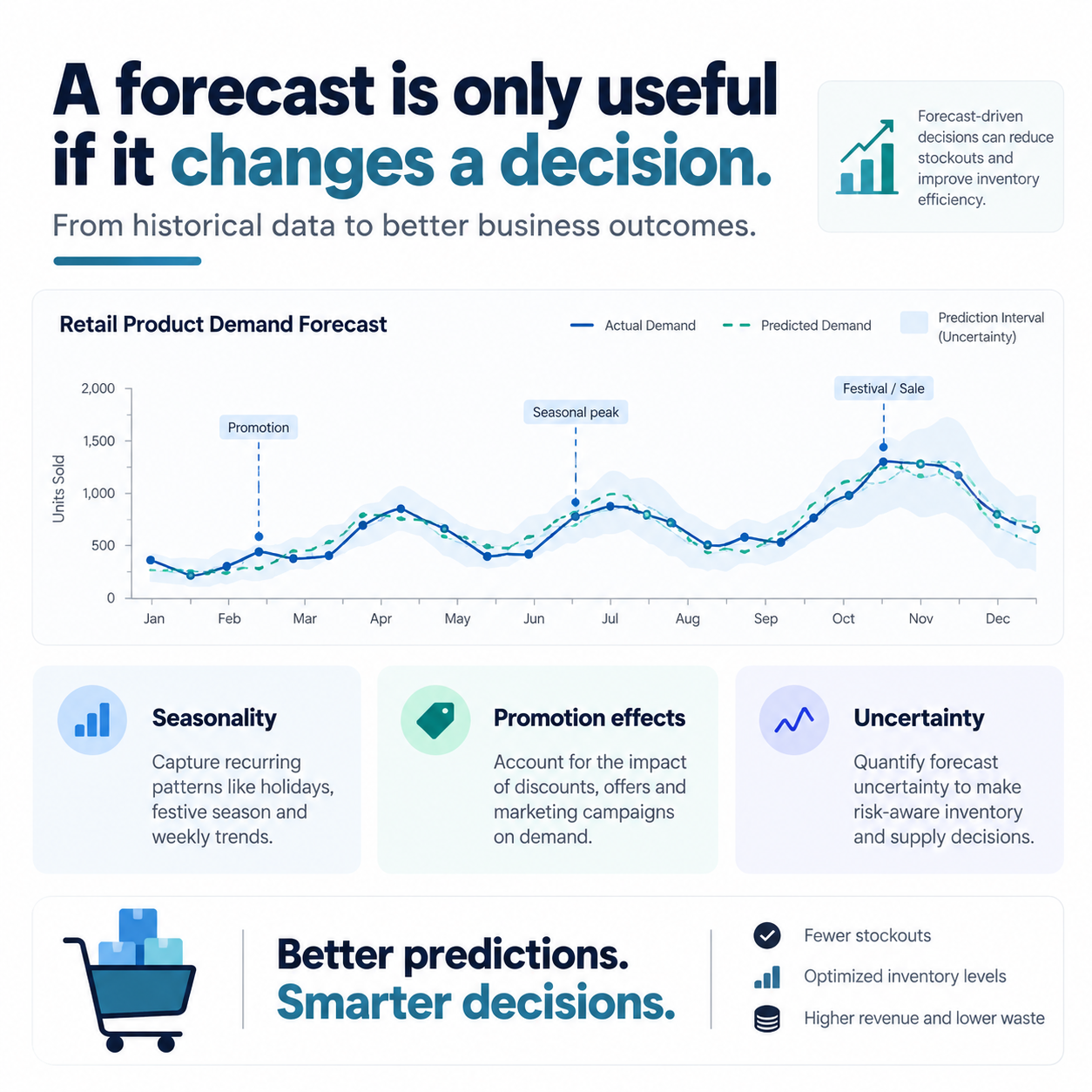
A forecast is only useful if it changes a decision.

One thing I find fascinating about data science is that building an accurate model is only half the job.

Imagine a retail business preparing for the festive season.

Your model predicts a 40% increase in demand for a particular product. That sounds great, but the real questions are:

Do we have enough inventory to meet the demand?
Is the increase driven by seasonality, promotions, or changing customer behavior?
How confident are we in the prediction?
What happens if actual demand is significantly higher or lower?

This is where data science moves beyond prediction and starts creating business value.

A good forecasting workflow combines historical patterns, external factors, model evaluation, and uncertainty estimation to help businesses make smarter decisions.

Because ultimately, the goal isn't just to predict what might happen. It's to help people decide what to do next.

For fellow data scientists: What's more challenging in your experience — improving model accuracy or translating predictions into actionable business decisions?

#datascience#machinelearning#python#demandforecasting#dataanalytics
Post image

Priya Banerjee

Data Scientist | NLP, forecasting, Python | Ex-researcher | Women in Tech mentor

Oct 12

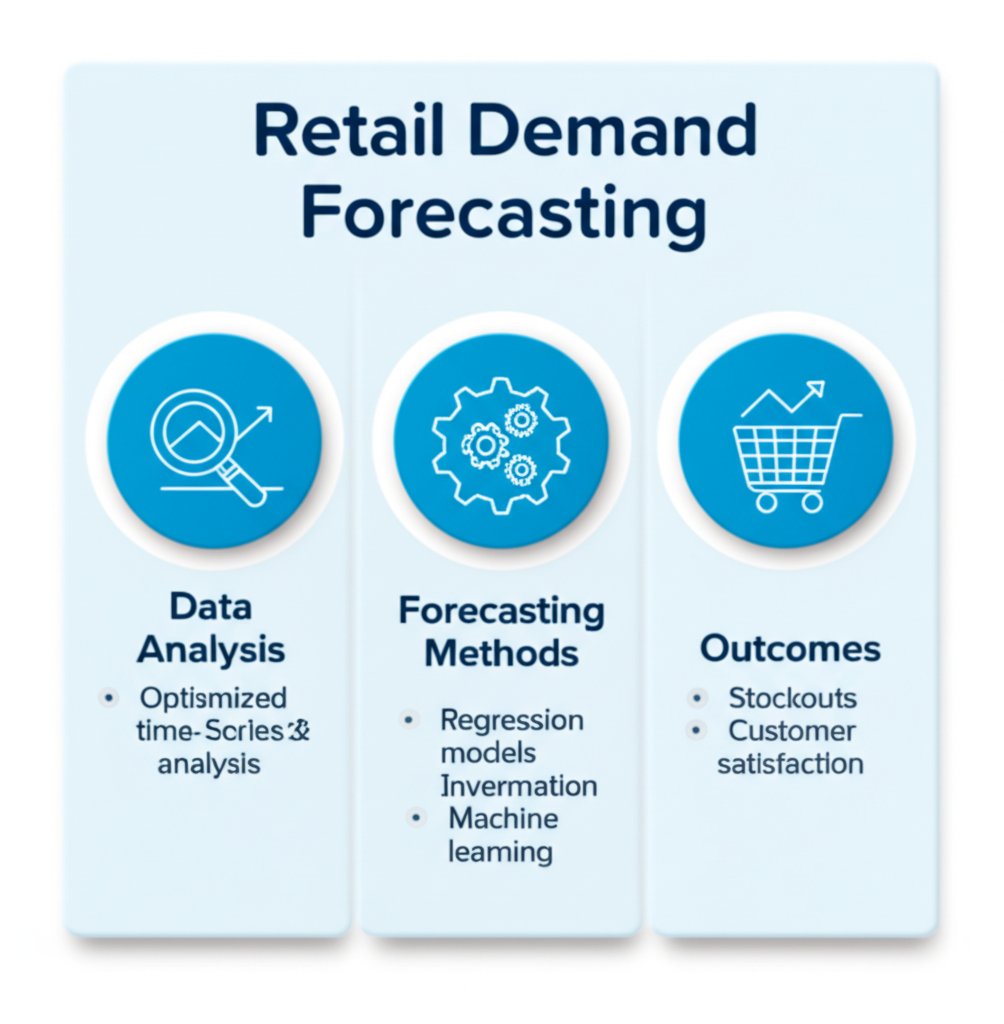
📊 Better Forecasts. Smarter Decisions.

One of the most interesting challenges in data science is turning historical data into actionable business insights.

Recently, I worked on a retail demand forecasting project focused on improving prediction accuracy and supporting smarter inventory decisions.

The journey involved:
🔹 Data preparation and feature engineering
🔹 Exploring demand patterns and seasonality
🔹 Building and evaluating machine learning models
🔹 Measuring performance using Mean Absolute Percentage Error (MAPE)

One key takeaway: a model isn't valuable just because it makes predictions. It becomes valuable when its predictions help businesses make better decisions.

As highlighted in my project, forecast error improved from 18% to 9% MAPE.

This reinforced my belief that good data science combines technical expertise, experimentation, and a clear understanding of business problems.

💬 Data science community: What techniques have helped you improve forecasting accuracy in your projects?

#datascience#machinelearning#python#demandforecasting#dataanalytics
Post image

Khushi Kumari

Oct 16

Which skill is most important for a successful IT career ?

Newer postsOlder posts

Featured jobs

See all

Popular communities

See all