
How to Build a Professional Network as a Student: 10 Practical Tips
Learn how to build a professional network as a student, connect with industry experts, discover internships, and grow your career with WorkOwon.
By Workowon Admin8 min read
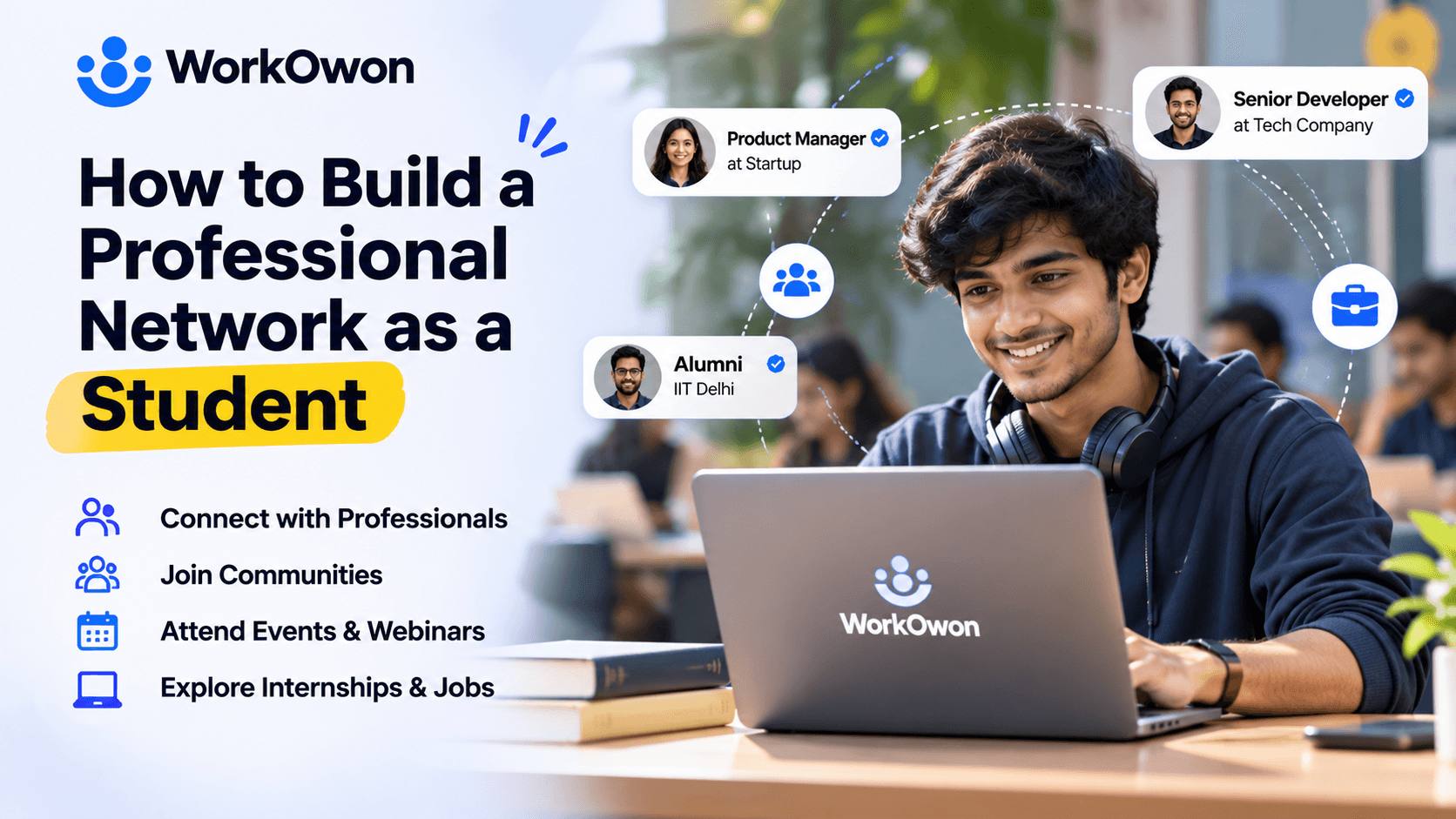
Starting your career can feel overwhelming, especially when you are still in college and have little or no professional experience. You might have the right skills, good academic results, and a strong interest in your industry, but finding the right opportunities can still be challenging.
One thing that can make a significant difference is professional networking.
Building professional connections while you are a student can help you discover internship opportunities, learn from experienced professionals, understand industry trends, and prepare for your future career.
But how do you build a professional network when you are just starting out?
In this guide, we will explore 10 practical ways to build a strong professional network as a student and explain how platforms like WorkOwon can help you connect with professionals and explore career opportunities.
1. Start Building Your Network Early
One of the biggest mistakes students make is waiting until graduation to start networking.
Professional networking should begin during your college years, not after you complete your degree.
Start connecting with classmates, seniors, professors, alumni, and people working in industries that interest you.
You do not need hundreds of connections. Focus on building meaningful relationships with people who share your professional interests.
Even a few valuable connections can help you learn about opportunities and gain useful career advice.
2. Create a Professional Online Profile
Your online presence is often the first impression people get of you professionally.
Create a professional profile that clearly communicates who you are, what you are learning, and what career opportunities interest you.
Make sure your profile includes:
A professional profile picture.
Your college and educational qualifications.
Your technical and professional skills.
Academic projects and achievements.
Internship experience, if available.
Your career interests.
If you are a computer science student, for example, mention technologies you are learning, projects you have developed, and areas of interest such as Java, Python, web development, or artificial intelligence.
Keep your profile updated as you gain new skills and experience.
3. Connect With Industry Professionals
Connecting with experienced professionals is one of the most effective ways to understand how your desired industry works.
Look for developers, designers, marketers, entrepreneurs, recruiters, and other professionals whose career journeys interest you.
When sending a connection request, avoid generic messages.
Instead, introduce yourself briefly and explain why you would like to connect.
For example:
"Hi, I'm a computer science student interested in backend development. I came across your professional profile and would love to connect and learn from your industry experience."
Keep your communication polite, genuine, and professional.
4. Join Professional Communities
You do not have to build your professional network entirely on your own.
Joining communities related to your interests allows you to interact with people who share similar career goals.
For example, students can explore communities related to:
Software Development
Java and Spring Boot
Artificial Intelligence
Data Science
Digital Marketing
Entrepreneurship
Career Development
Participate in discussions, ask relevant questions, share useful resources, and contribute your knowledge.
Being an active community member can help you build visibility and establish meaningful professional relationships.
5. Attend Industry Events, Webinars, and Meetups
Professional events provide opportunities to interact with people outside your college environment.
Attend technology conferences, industry webinars, career fairs, workshops, and networking meetups.
These events can help you:
Learn about industry developments.
Meet experienced professionals.
Discover internship opportunities.
Understand employer expectations.
Build relationships with people in your field.
Do not hesitate to introduce yourself or ask thoughtful questions during networking sessions.
Sometimes, a short conversation at an event can become the beginning of a valuable professional connection.
6. Work on Projects and Share Your Knowledge
Your projects can become excellent conversation starters.
If you are learning programming, build small applications. If you are interested in marketing, work on practical campaigns. If you are studying design, create a portfolio.
Share your progress, achievements, and learnings with your professional network.
You can publish:
Personal and academic projects.
Technical tutorials.
Lessons learned while learning a new skill.
Internship experiences.
Industry-related insights.
Sharing useful content demonstrates your interests, commitment, and willingness to learn.
Remember, you do not need to be an expert to share something valuable.
7. Connect With College Alumni
Your college alumni network can be a valuable resource for career guidance.
Alumni have already experienced the transition from college to professional life. They may be able to share insights about interviews, internships, workplace expectations, and industry requirements.
You can connect with alumni through college groups, professional networking platforms, alumni events, and online communities.
When reaching out, ask specific questions instead of immediately requesting referrals.
Building a genuine relationship is more important than asking for opportunities right away.
8. Look for Internships and Collaborative Opportunities
Internships are not just about gaining work experience. They also help you meet professionals, understand workplace culture, and develop industry connections.
Explore internships, freelance projects, volunteering opportunities, and collaborative projects related to your interests.
Working with others allows you to develop relationships with teammates, mentors, and industry professionals.
These connections may become valuable throughout your career.
9. Stay Connected With Your Network
Building connections is only the first step. Maintaining them is equally important.
Do not connect with someone and disappear until you need a job.
Instead:
Congratulate people on their achievements.
Share relevant articles and resources.
Participate in professional discussions.
Check in occasionally.
Offer help whenever possible.
Appreciate advice and guidance.
Professional relationships grow through consistent and meaningful interactions.
10. Use Professional Networking Platforms Like WorkOwon
In today's digital world, professional networking is no longer limited to conferences, college events, or personal introductions.
Online professional networking platforms make it easier for students to discover professionals, participate in communities, and explore career opportunities.
WorkOwon is a professional networking and job search platform designed to bring these opportunities together.
With WorkOwon, students can:
Build Professional Connections: Discover and connect with professionals from different industries.
Explore Job Opportunities: Find available jobs and internships relevant to their career interests.
Join Professional Communities: Participate in discussions, share knowledge, and learn from others.
Discover Events: Explore professional events, webinars, and networking opportunities.
Build an Online Presence: Create a professional profile to showcase skills, education, and experience.
Explore AI Career Assistance: Get help improving resumes and strengthening professional profiles.
Instead of limiting your career preparation to academic activities, start building your professional presence while you are still a student.
Visit www.workowon.com and start building your professional network today.
Common Networking Mistakes Students Should Avoid
While building professional connections, avoid these common mistakes:
Connecting only when you need a job: Networking should be about relationships, not just immediate benefits.
Sending generic connection requests: Personalize your messages whenever possible.
Ignoring your online profile: Keep your professional information accurate and updated.
Being inactive in communities: Participate in discussions instead of simply joining groups.
Expecting immediate results: Meaningful professional relationships take time.
Asking for referrals too early: Build trust before asking for professional favors.
Not following up: Stay in touch with people you meet.
Avoiding these mistakes can help you build stronger and more meaningful professional relationships.
Frequently Asked Questions (FAQs)
1. Why is professional networking important for students?
Professional networking helps students connect with industry experts, discover internships, learn about career opportunities, gain industry insights, and build relationships before entering the workforce.
2. How can students build a professional network without experience?
Students can start by connecting with classmates, professors, alumni, and industry professionals. Joining online communities, attending webinars, sharing projects, and participating in professional discussions are also effective ways to build connections.
3. Which platform is best for professional networking for students?
Students can explore professional networking platforms such as WorkOwon and LinkedIn to connect with professionals, discover opportunities, and participate in industry-related discussions.
4. How many professional connections should a student have?
There is no fixed number. Focus on building meaningful relationships rather than collecting hundreds of connections. A smaller network of engaged professionals can be more valuable than a large inactive network.
5. When should students start professional networking?
The best time to start is during college. Even first-year students can begin building connections, exploring industries, learning new skills, and participating in professional communities.
6. Can professional networking help students get internships?
Yes. Networking can help students discover internship openings, learn about companies, connect with recruiters, and receive career guidance. However, opportunities are never guaranteed.
Final Thoughts
Building a professional network as a student is an investment in your future career.
You do not need years of experience, an impressive job title, or hundreds of connections to get started. You simply need curiosity, consistency, and a willingness to connect with people.
Start building relationships, participate in professional communities, attend industry events, and share what you learn.
Most importantly, do not wait until graduation to start thinking about your career.
Your professional journey starts before your first job.
Start connecting, discovering opportunities, and growing your career with WorkOwon.
WorkOwon – Connect, Collaborate & Create Opportunities.