workOwonworkOwonA New Way to Connect
HomeFeedJobsCommunitiesEventsFeaturesAbout workOwon

New to workOwon?

  • Post and join conversations
  • Apply to jobs in a few clicks
  • Join communities in your field
Join nowLog in

Popular communities

See all

See what professionals are talking about

Browse public posts from people and communities. Join to react, comment and post.

Log inJoin now

Aditya Nair

DevOps / SRE | Kubernetes, Terraform, AWS | Making deploys boring since 2019

Oct 25

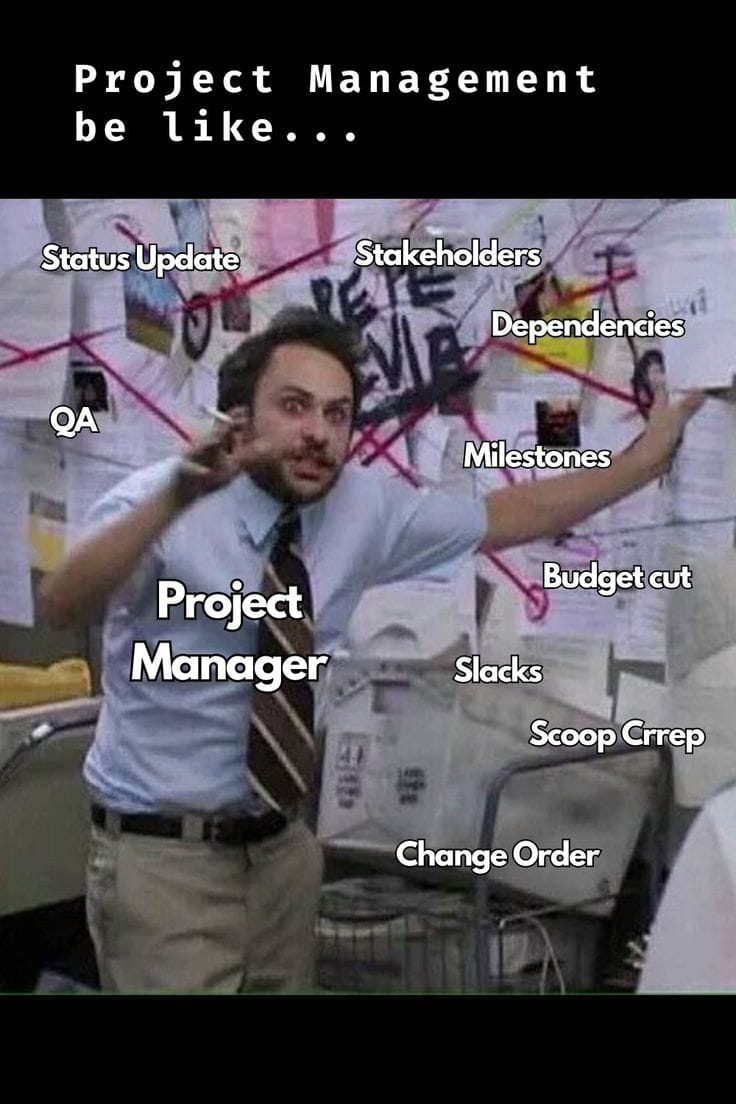
A Day in the Life of a DevOps Engineer

Developer: “The code works perfectly on my machine!”

DevOps: “Okay, let's deploy it.”

Production: Immediately starts having an existential crisis.

Monitoring: “ALERT! ALERT! ALERT!”

Manager: “Is the system down?”

DevOps Engineer: “I'm investigating.”

Meanwhile, the DevOps engineer is checking Kubernetes pods, reading logs, reviewing dashboards, and questioning every life decision that led to this moment. ☕😂

And just when everything is finally stable…

Developer: “I made one small change. Can we deploy again?”

DevOps isn't just automation. It's turning chaos into a system that works — preferably before the coffee gets cold.

DevOps and SRE folks, be honest: What's scarier?

1️⃣ A production alert at 2 AM
2️⃣ A Friday evening deployment
3️⃣ Someone saying, “It’s just a small change” 😂
#devops#sre#kubernetes#productionlife#devopshumor#techmemes#softwareengineering

Aditya Nair

DevOps / SRE | Kubernetes, Terraform, AWS | Making deploys boring since 2019

Oct 25

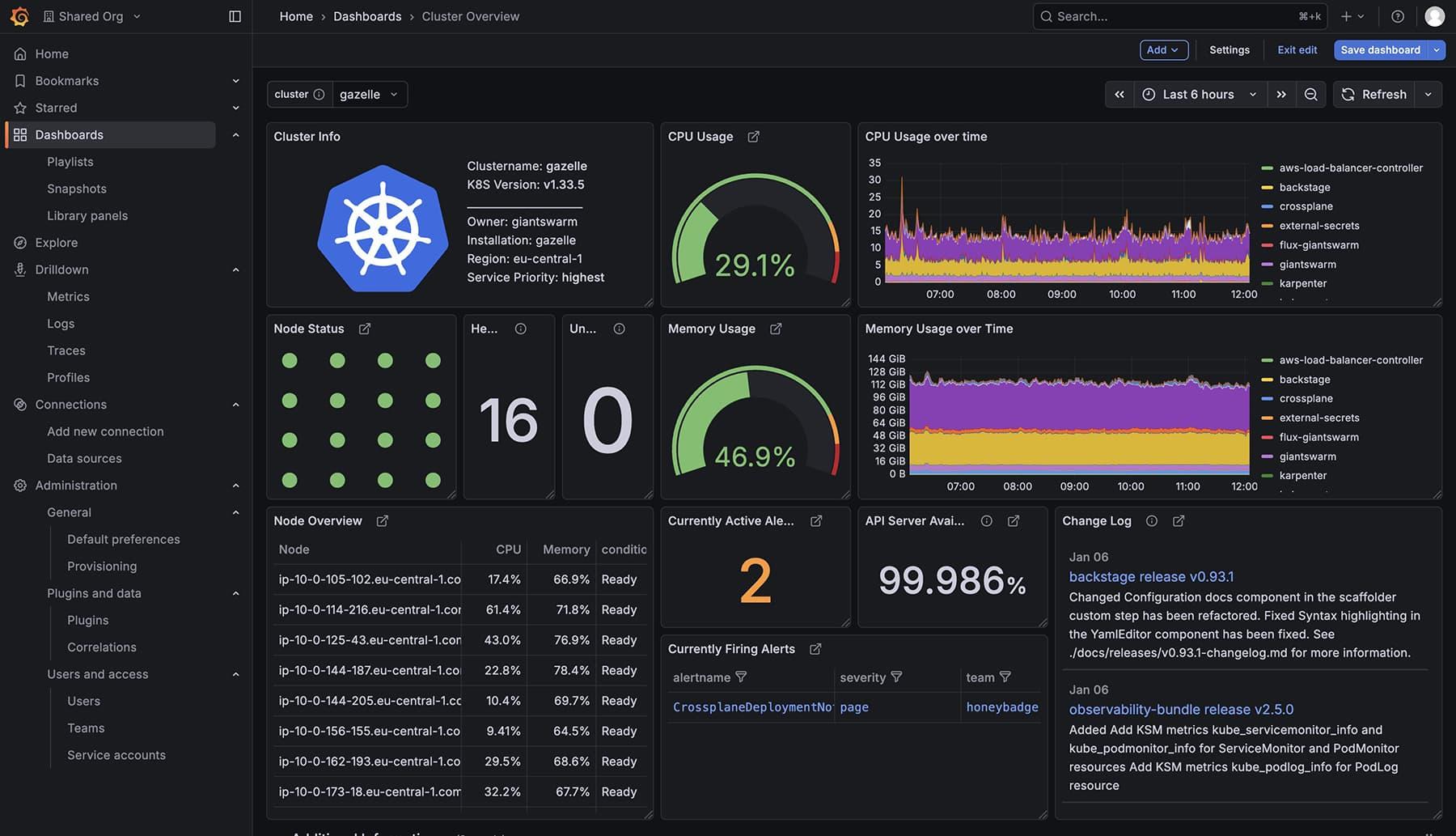
A Deployment Is Not Successful Just Because the Pipeline Is Green!

In DevOps, it's easy to celebrate when a CI/CD pipeline completes successfully. But the real question is: Is the application healthy after deployment?

A successful deployment should mean more than just pushing code to production.

Here are 5 things every DevOps engineer should check:

1. Application Health Checks
Use readiness and liveness probes in Kubernetes to help detect unhealthy containers and manage traffic appropriately.

2. Error Rates and Latency
Monitor whether the deployment increases API failures or response times.

3. Resource Utilization
Check CPU and memory usage to identify resource bottlenecks or unnecessary allocations.

4. Logs and Alerts
Make sure logs provide useful context and alerts notify the team about real issues, not every minor fluctuation.

5. Rollback Strategy
Have a clear recovery plan so the team can respond quickly if a release causes problems.

One important lesson: CI/CD automates delivery, but observability helps us understand what happens after delivery.

The goal isn't simply to deploy faster. It's to deploy confidently, detect issues early, and keep systems reliable.

DevOps and SRE engineers: What do you check first when a production deployment starts behaving unexpectedly?

#devops#sre#kubernetes#cicd#cloudengineering#observability#sitereliabilityengineering#continuouslearning
Post image

Ishaan Reddy

ML Engineer | LLMs, RAG, Python | Shipping AI features that survive production

Oct 27

From raw data to production-ready models, the journey of a Machine Learning Engineer is never boring! 

Building models in a Jupyter notebook is only the first step. The real magic happens when you deal with messy data, optimize inference latency, and deploy robust pipelines that scale.

Here is a quick snapshot of what my day-to-day looks like:

  • Cleaning and preprocessing large datasets for training.

  • Experimenting with different architectures to improve accuracy and performance.

  • Collaborating with software engineering teams to integrate models into core products.

  • Monitoring model drift and retraining pipelines in production.

What is the most challenging part of ML for you? Is it data quality, model deployment, or keeping up with new research? Let me know in the comments!

#machinelearning#mlengineer#artificialintelligence#datascience#techcareers#workowon

Nikhil Chowdhury

Backend Engineer | Python, Django, Postgres | Fintech | Remote-first

Oct 27

Why Database Performance Matters More Than We Think

A backend API can look perfectly fine in development but become painfully slow when real users start using it. Often, the database is where the real bottleneck hides.

Here are 4 practices that can make a difference:

Use indexes wisely: Index frequently queried columns, but remember that unnecessary indexes can slow down writes.

Avoid N+1 queries: Fetch related data efficiently instead of making repeated database calls.

Analyze slow queries: PostgreSQL's EXPLAIN ANALYZE helps understand how a query actually executes.

Measure real performance: Monitor query latency, connection usage, and database load before making changes.

One lesson I've learned: Don't optimize based on assumptions. Measure first, identify the bottleneck, make one change, and measure again.

Good backend engineering isn't always about writing more code. Sometimes, it's about making the database do less work.

Backend developers: What's your go-to tool for debugging slow SQL queries?

#backenddevelopment#python#django#postgresql#databaseoptimization#softwareengineering

Aarav Sharma

Senior Backend Engineer @ Paylane | Java, Spring Boot, Kafka | Building payment rails that don't wake you up at 3am

Oct 19

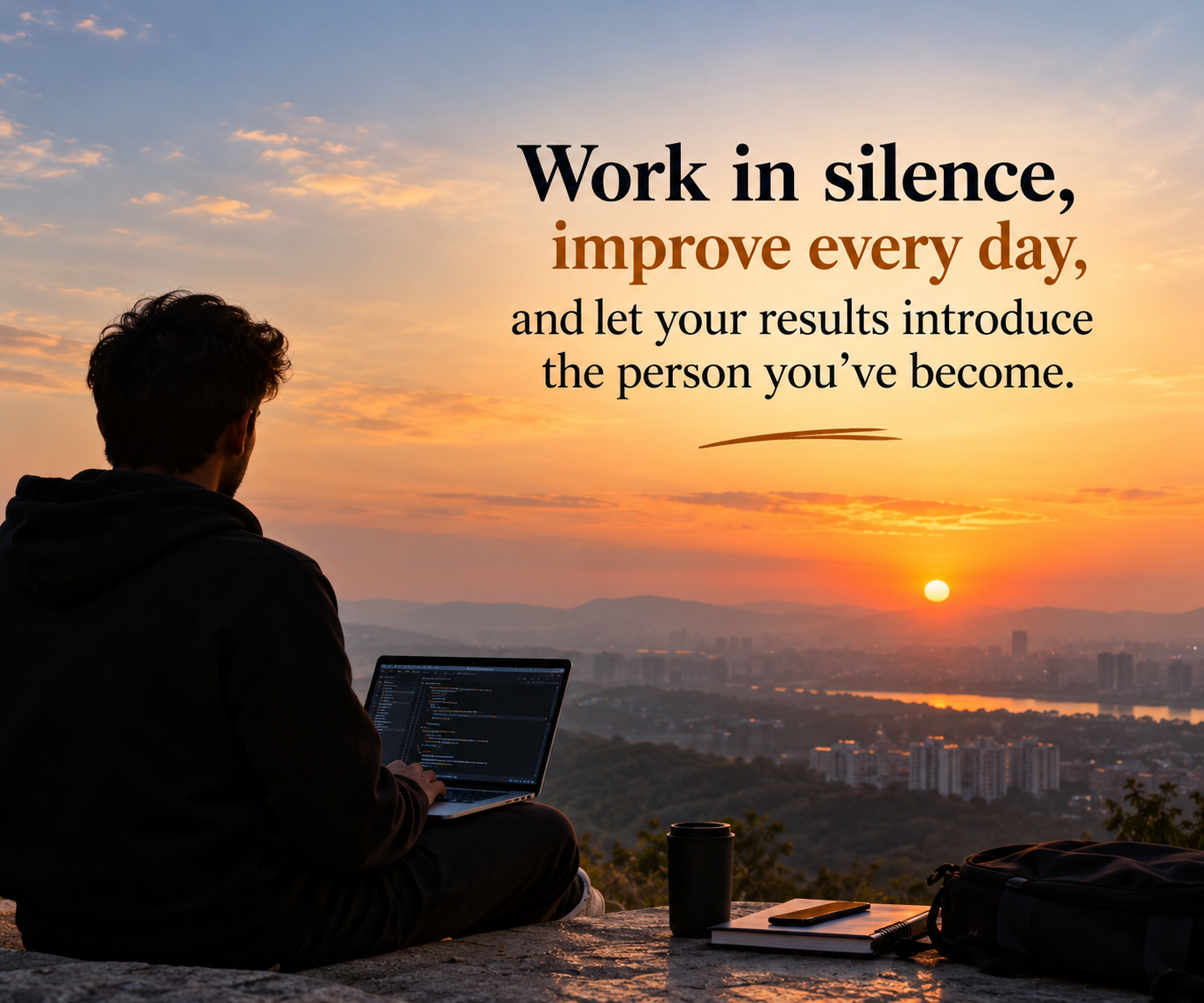
Some days, progress feels invisible. Some efforts go unnoticed, and some goals seem farther away than ever.

But growth isn't always loud. Sometimes, it's simply showing up, learning something new, solving one more problem, and refusing to settle for the person you were yesterday.

Keep building. Your future self is counting on you.

#growthmindset#careergrowth#consistency#professionaldevelopment
Post image

Myra Chawla

Product Manager @ Moneyleaf | Fintech, payments, growth | Ex-engineer

Oct 27

Post image

Ishaan Reddy

ML Engineer | LLMs, RAG, Python | Shipping AI features that survive production

Oct 28

Building with LLMs? Accuracy Is Only Half the Story!

Working with LLMs and RAG systems has taught me that a good AI feature isn't just about generating impressive answers. It's about making those answers useful, reliable, and affordable.

Here are 4 things I always consider when building practical GenAI applications:

Retrieval Quality: The right context matters more than simply adding more documents.

Evaluation: Test real user questions, measure answer quality, and track hallucinations.

Latency: A brilliant answer isn't helpful if users have to wait too long.

Cost: Optimize retrieval, caching, and model selection to balance quality with expenses.

One important lesson: Not every problem needs an LLM. Sometimes, a simple search, SQL query, or traditional ML model is faster, cheaper, and more reliable.

The goal isn't to use AI everywhere. It's to use AI where it creates real value.

What's the biggest challenge you've faced with LLM applications — accuracy, latency, or cost?

#machinelearning#generativeai#llm#rag#artificialintelligence#mlops#datascience

Vivaan Patel

Frontend Engineer | React, Next.js, TypeScript | Obsessed with fast, accessible UIs

Oct 28

A Small Frontend Improvement Can Make a Big Difference!

While working on frontend development, I've realized that a great user experience often comes from the smallest details.

A button that responds instantly.
A form that clearly explains errors.
A page that loads quickly on mobile.
A checkout flow that doesn't confuse users.
A design that everyone can access and use.

With React, performance optimization isn't just about writing less code — it's about building interfaces that feel smooth, responsive, and reliable.

My takeaway: Don't just build interfaces that look good. Build experiences that make users' lives easier.

What's one small UI improvement that you think makes a huge difference?

#frontenddevelopment#reactjs#webperformance#uiux#softwareengineering

Anika Verma

Data Analyst | SQL, Power BI, Python | Turning messy data into decisions

Oct 23

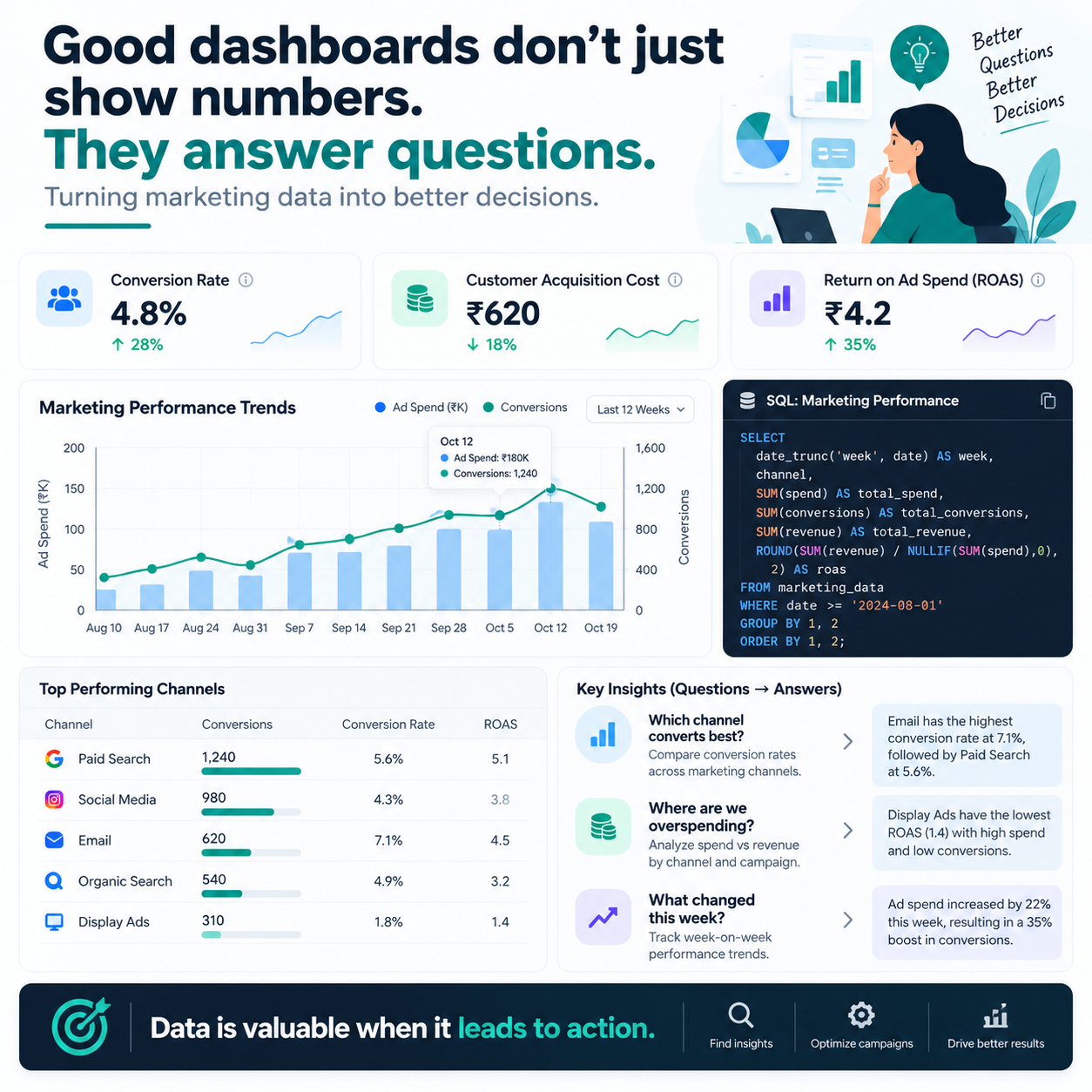
As a Data Analyst, one thing I'm learning is that the real value of data isn't in how many metrics we track — it's in the questions we can answer.

Imagine a marketing campaign where clicks are increasing, but revenue isn't moving.

A quick look at the dashboard might suggest success. But digging deeper could reveal:

More traffic, but a lower conversion rate
Higher customer acquisition costs
One marketing channel consuming budget without delivering returns
A change in customer behavior that wasn't obvious at first

This is where SQL and thoughtful analysis make a real difference.

Instead of asking, “How many clicks did we get?”, we can ask:

Which channel brings the most valuable customers?
Where are we spending money without seeing results?
What changed compared with last month?
What action should the business take next?

I'm increasingly interested in moving beyond reporting what happened to understanding why it happened and what we should do about it.

Because a good analyst doesn't just present numbers. They help people make better decisions.

What's one metric you think businesses often misunderstand or focus on too much?

#dataanalytics#sql#businessintelligence#datavisualization#python#datadriven
Post image

Priya Banerjee

Data Scientist | NLP, forecasting, Python | Ex-researcher | Women in Tech mentor

Oct 8

Our demand forecasting model's error dropped from 18% to 9% MAPE. The biggest improvement wasn't a fancier model. It was adding Indian festival calendars and local holidays as features. Diwali week looks nothing like a normal week 😄

Newer postsOlder posts

Featured jobs

See all

Popular communities

See all